Use matte paper
Matte paper or card stock reduces reflections, so the black and white edge stays easier for a baby to focus on.
Make each session count

High contrast is still helpful even after babies begin to notice colors. The goal is calm focus, not overstimulation.
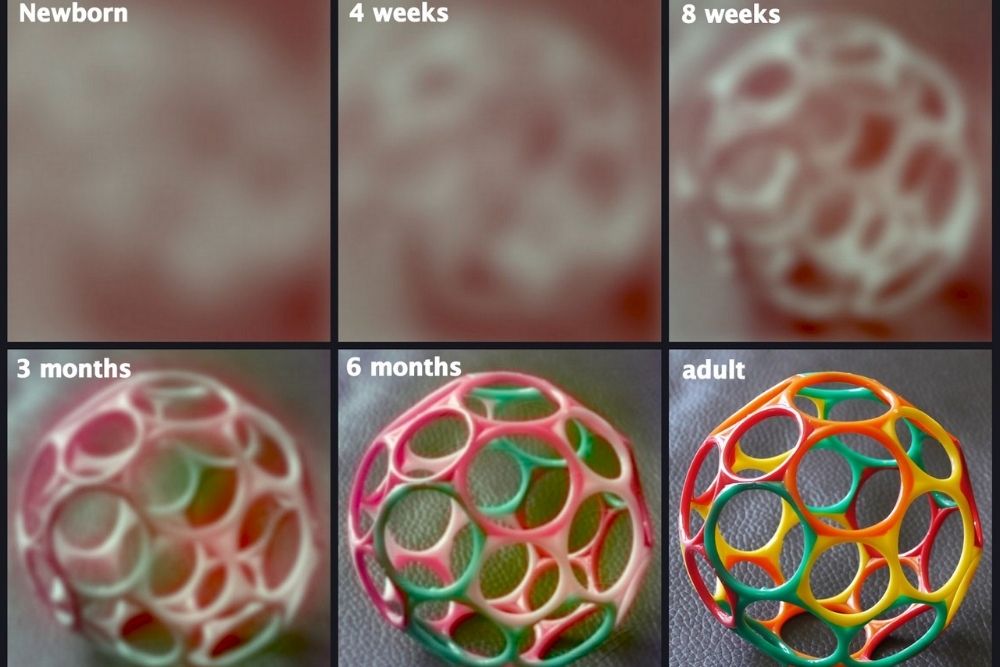
Sees high-contrast shapes best
Begins tracking slow movement
Improved focus and pattern recognition
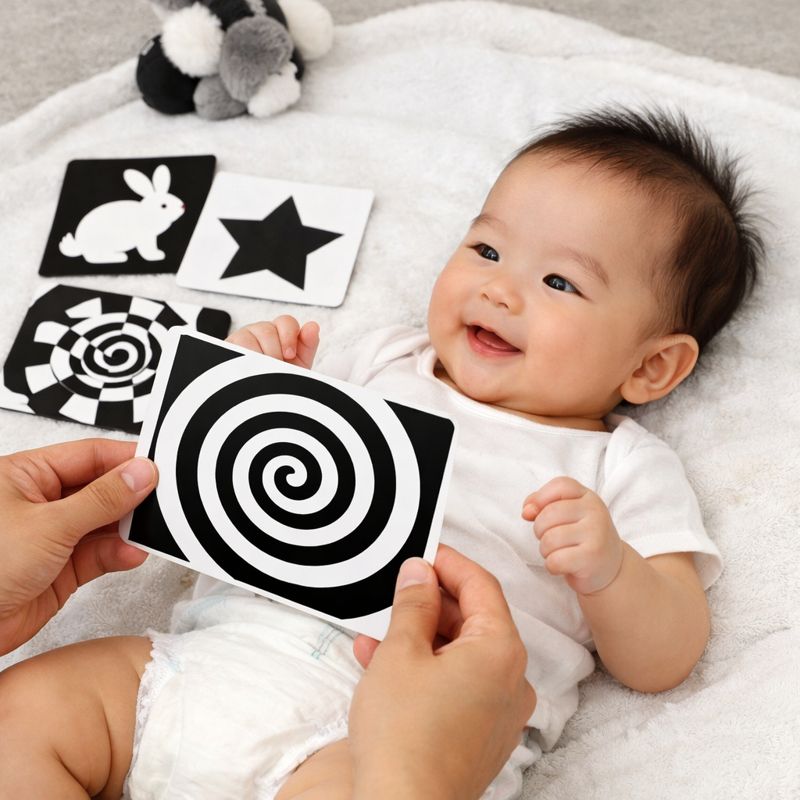
Printable cards work best when the image stays sharp, the paper does not glare, and the card is easy for a parent to hold steady.
Matte paper or card stock reduces reflections, so the black and white edge stays easier for a baby to focus on.
Avoid stretching or auto-fitting the image. Clear proportions make the pattern easier to recognize during short sessions.
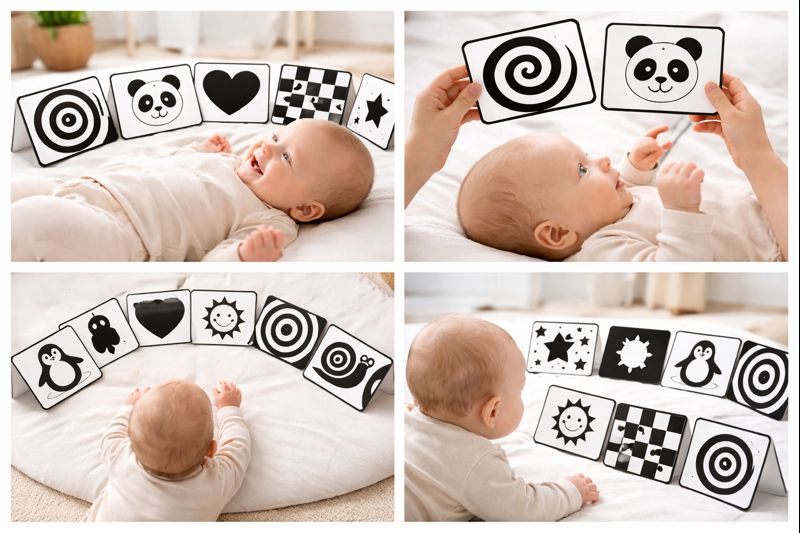
Start with 6-10 simple cards and rotate them slowly instead of printing every pattern at once.
Rotate or tilt cards to add freshness without changing content.
Try this:
Show one card twice, then turn it 90 degrees.
Diaper changes are a natural time for quick visual focus.
Try this:
Place one card beside the changing table.
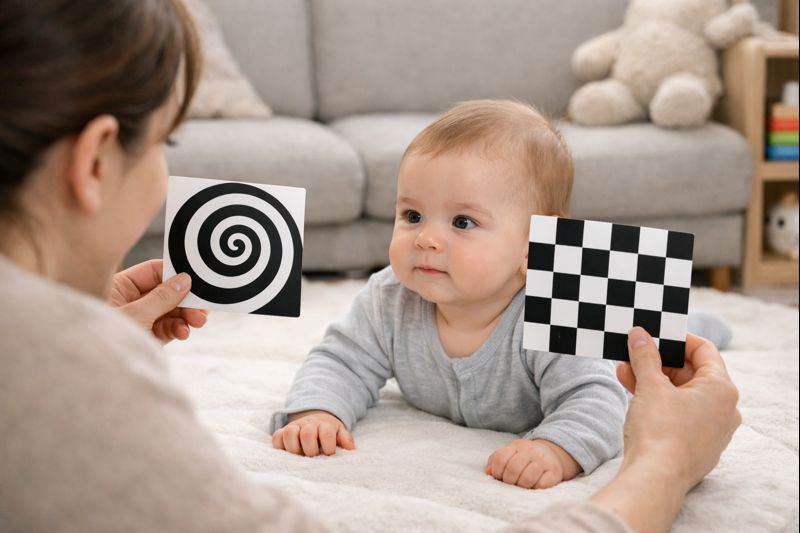
Slow left-right movement supports early eye coordination.
Try this:
Move the card about 10-15 cm across the field of view.
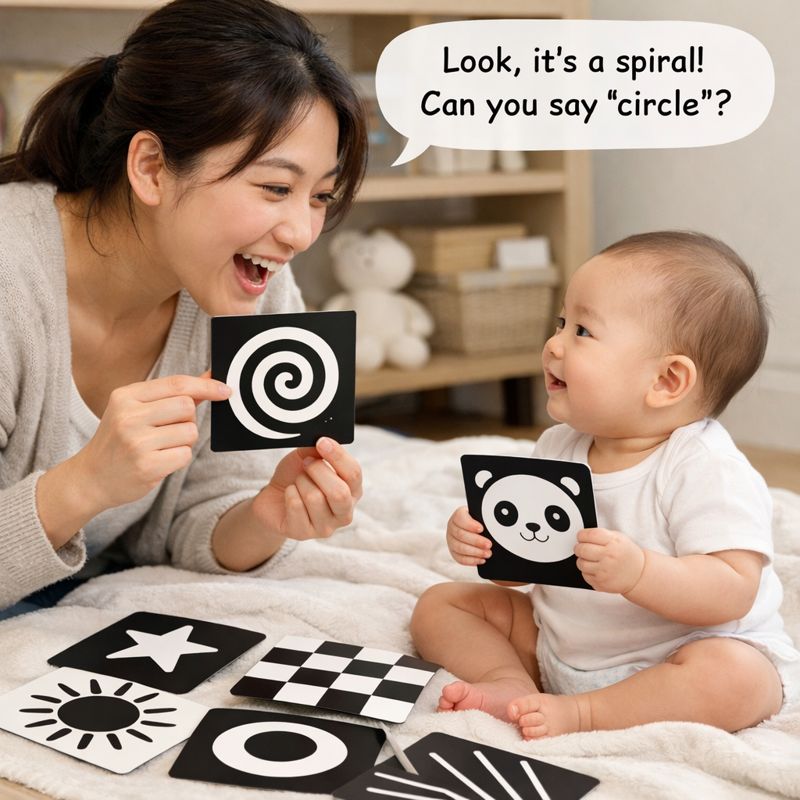
Naming shapes helps link sound with what baby sees.
Try this:
Say "circle" or "star" softly as you show it.
Keep a comfortable distance and stop before fussiness starts.
Try this:
Aim for 5-10 minutes and pause if baby looks away.
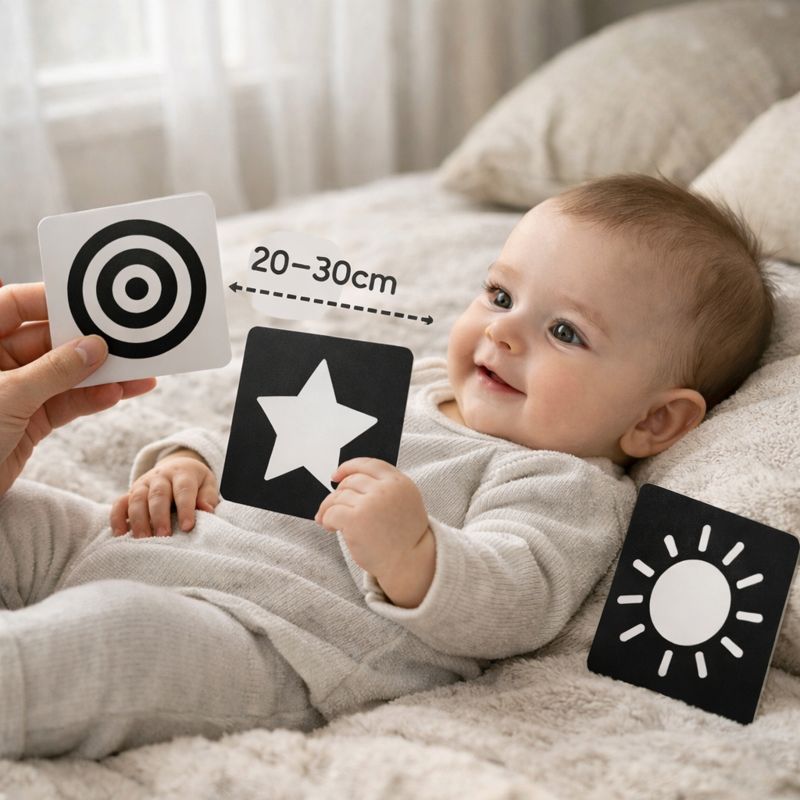
A few calm repetitions are more useful than a long session with constant changes.
Move the card slowly and wait until your baby has noticed it before starting tracking practice.
Looking away, fussing, yawning, or closing the eyes are good reasons to stop and cuddle.
Printed cards are easier to control and avoid brightness, notifications, and screen distractions.
High-contrast patterns are among the first visual inputs infants can clearly process.
Short, repeated visual sessions can support early attention skills.
You can start around 2-3 weeks if baby is alert and calm.
5-10 minutes is usually enough. Stop earlier if baby looks away.
Color can be introduced gradually after 3-4 months, but contrast cards still help.
Yes, download and print on thicker paper for better contrast.
Give your baby a calm, focused visual experience today.
Start Now