0-2 months
Use large circles, bold dots, simple stripes, and clear faces. Keep the card still first, then stop as soon as your baby looks away.
A simple routine for early visual support

Black and white cards are ideal for 0-6 month babies because strong contrast is easiest to see. With calm sessions and gentle movement, you can support early visual skills.
Bold contrast helps immature visual systems focus.
Simple patterns encourage short periods of steady looking.
Slow movement helps eyes learn to follow.
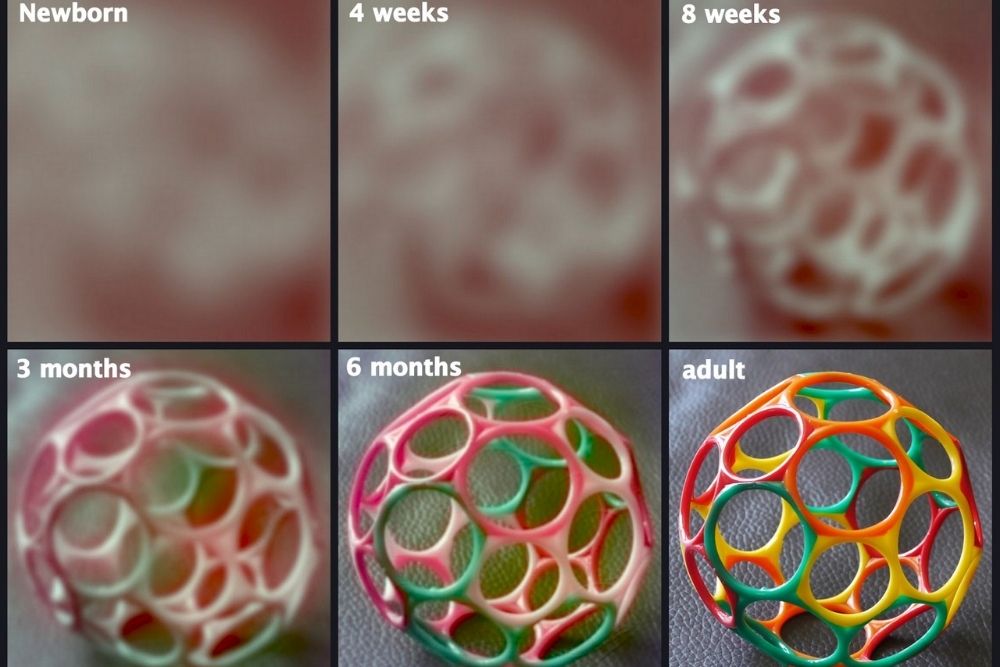
Use large circles, bold dots, simple stripes, and clear faces. Keep the card still first, then stop as soon as your baby looks away.
Add slow side-to-side movement, spirals, and animal outlines. Keep the distance steady at about 20-30 cm.
Introduce denser patterns, everyday objects, and short naming games while keeping the session calm and supervised.
Choose a quiet time when baby is alert. Use soft, even light and a comfortable position.

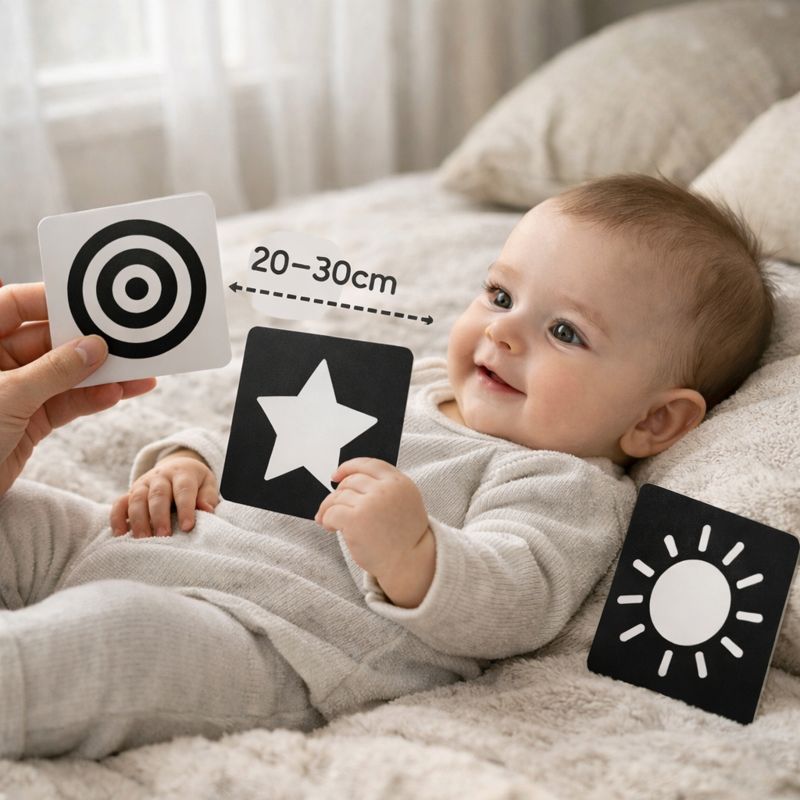
Hold the card about 20-30 cm from the face and move it slowly side to side.
Describe the shape in a soft voice and watch for signs of tiredness.

Stop if baby turns away, fusses, or seems tired.
Stay within 20-30 cm for best focus.
Avoid sessions when baby is hungry or sleepy.
Start with simple shapes, then add more complex patterns.
Choose an alert, calm moment after feeding or rest. Avoid starting when your baby is hungry, sleepy, or overstimulated.
Hold the card around 20-30 cm from the face and keep your own movement slow and predictable.
Prepare only two or three cards so the session feels simple and repeatable.
Stop early when your baby turns away, closes the eyes, or becomes fussy.
Try a short, calm session and see what captures your baby's attention.
Start